The material
LDPE, LLDPE, HDPE — and which one your packing actually needs
Three materials, one family, and a great deal of confusion. They are all polyethylene, they all look broadly similar on a shelf, and they behave very differently in a warehouse.
We build our range on LLDPE, and this page explains why — including the cases where it is the wrong answer and you should be buying something else.
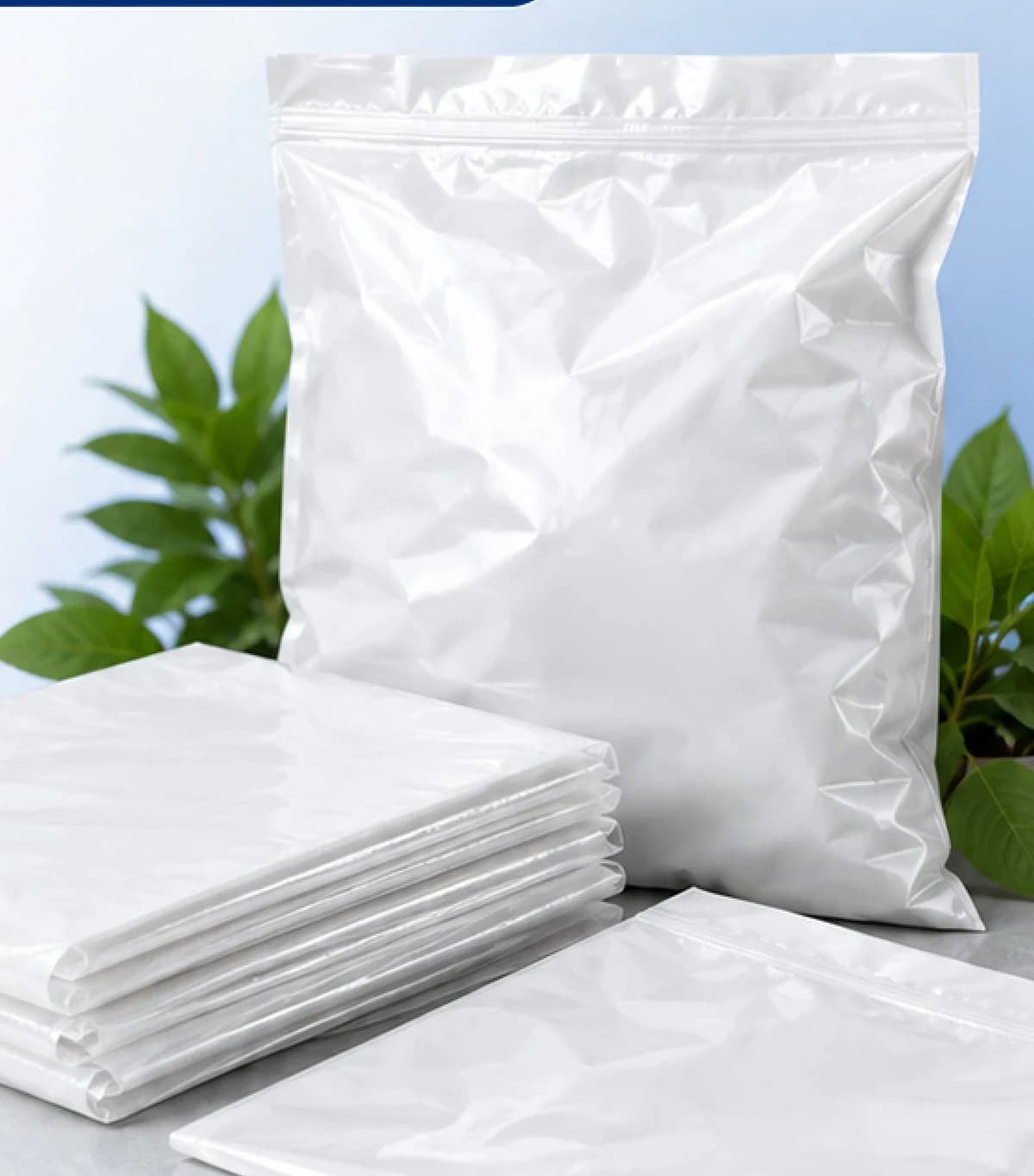
Side by side
The three of them
LDPE
Low-density polyethylene
- Density
- 0.917 – 0.930 g/cm³
- Feel
- Soft, flexible, glossy
Strengths
- Excellent clarity and gloss
- Very easy to seal — wide heat window
- Soft hand feel
Trade-offs
- Lower tensile strength
- Punctures more easily
- Needs more thickness for the same job
Use it for: Garment bags, light retail packing, anywhere appearance leads.
LLDPE
Linear low-density polyethylene
- Density
- 0.915 – 0.925 g/cm³
- Feel
- Tough, slightly less glossy, stretchy
Strengths
- Higher tensile strength than LDPE
- Markedly better puncture and tear resistance
- Downgauges well — same strength at lower micron
Trade-offs
- Narrower heat-seal window
- Slightly lower gloss than LDPE
Use it for: The default for anything that has to survive handling. What we build our range on.
HDPE
High-density polyethylene
- Density
- 0.930 – 0.970 g/cm³
- Feel
- Stiff, crinkly, translucent rather than clear
Strengths
- Highest strength-to-weight ratio
- Very thin bags carry real load
- Good chemical resistance
Trade-offs
- Hazy — poor clarity
- Crinkles audibly
- Less puncture-tolerant than LLDPE at low gauge
Use it for: Where weight and cost matter more than looks — liners, waste, high-volume light-duty.
Property by property
What changes when you change material
| Property | LDPE | LLDPE | HDPE |
|---|---|---|---|
| Tensile strength | Moderate | High | Highest |
| Puncture resistance | Low | High | Moderate |
| Tear resistance | Moderate | High | Moderate |
| Clarity | Excellent | Good | Poor — hazy |
| Gloss | High | Moderate | Low |
| Heat-seal window | Wide — very forgiving | Narrower | Narrow |
| Flexibility | Very soft | Soft, stretchy | Stiff, crinkly |
| Downgauging potential | Limited | Excellent | Good |
The argument that costs us money
A thinner bag that works better
LLDPE's practical advantage is that it can often be run thinner than LDPE for the same job. A bag that needs 60 micron in LDPE may perform at 50 in LLDPE — about 17% less film, which is 17% less cost per bag and 17% less plastic entering the waste stream. We will tell you when that applies to your specification, even though it means selling you fewer kilograms.
Worked example
- Current bag
- LDPE, 10" × 12", 60 micron
- Weight per bag
- 8.6 g
- Switched to
- LLDPE, 10" × 12", 50 micron
- New weight per bag
- 7.2 g
- Film saved
- ≈ 17% per bag
Still not sure which material you need?
Four questions and the selector will tell you — with the reasoning shown, so you can check our working rather than take our word for it.
We run all three: LD, LLD and HD, 15–200 micron.